Port congestion, shallow-draft hazards, tidal variation, and busy traffic separation schemes make harbor navigation among the most demanding environments for autonomous vessels. Passive buoys and radar reflectors tell a vessel where obstacles are — they cannot tell it where to go, how fast to slow, or which lane to hold. Beluga Navigation Systems replaces passive markers with active, communicating infrastructure that gives vessels the digital guidance they need to transit safely and efficiently without human intervention.
The Challenge of Autonomous Vessel Navigation
Vessel masters and harbor pilots know that close-quarters maneuvering in confined waters is where groundings and collisions happen. AIS and ECDIS provide situational awareness; they do not provide turn-by-turn navigation through a channel entrance or a berth approach. Radar and LiDAR obstacle avoidance stop a vessel from hitting things — they do not tell it which fairway lane to follow or when to begin a swing.
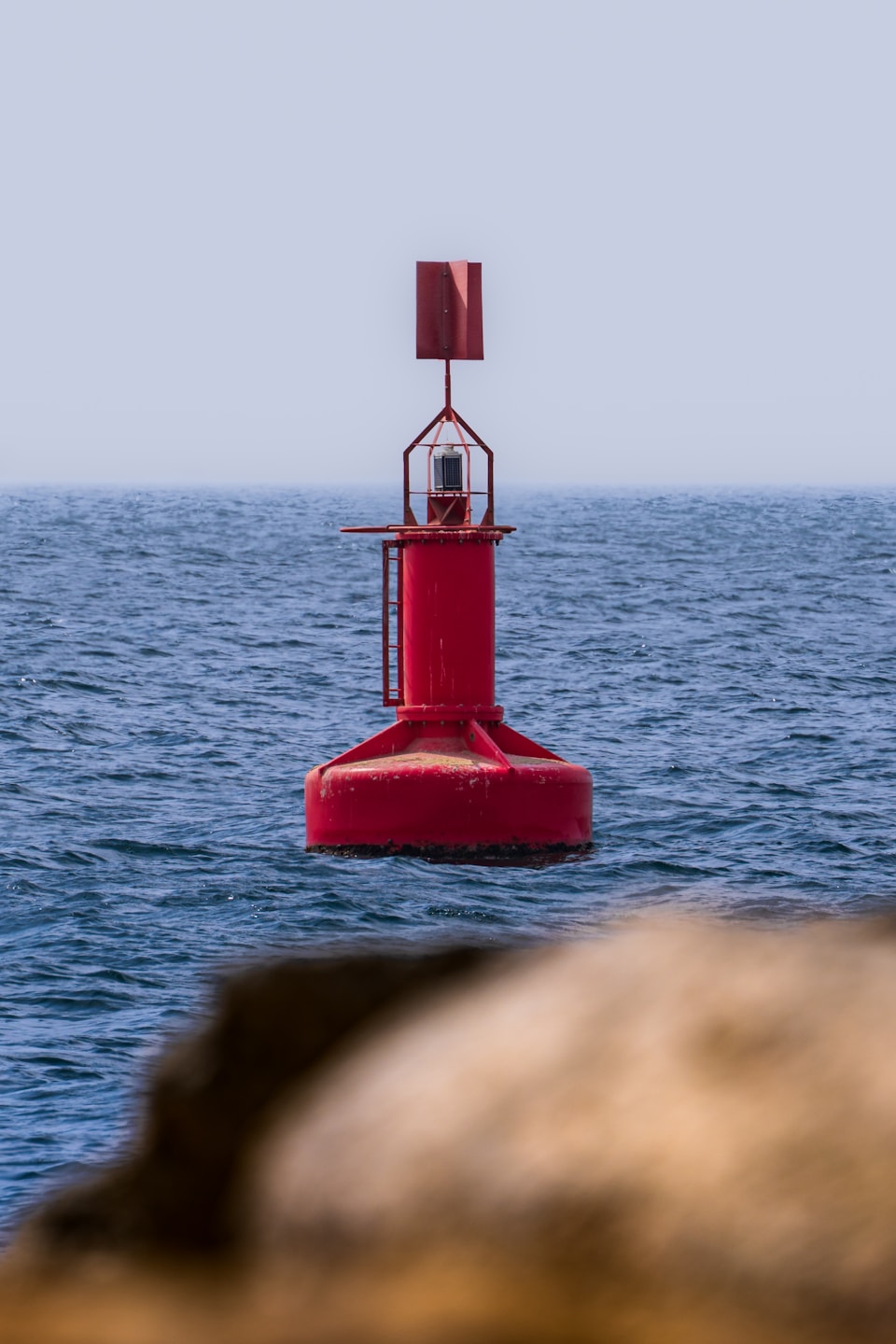
Beluga’s BIDAR™ protocol solves this with Long-Range and Mid-Range GRGuide beacons fitted to channel markers, buoys, jetty heads, and berth structures. Approaching vessels equipped with a GRNav module receive precise positioning and navigation instructions from each beacon as they enter its influence range — up to 25 km for high-speed approach phases, narrowing to 500 m for channel transits and 1 m precision for docking.
Applications
- Harbor channel guidance — active BIDAR™ buoys replace passive reflectors, providing lane-keeping instructions to inbound and outbound vessels
- Berth approach and docking assistance — centimeter-accurate positioning during the final approach phase where GPS multipath is worst
- Container terminal operations — guide vessels to precise berth positions for crane-arm alignment without manual tugging
- AUV and USV mission management — define waypoint corridors and speed gates digitally, with no surface support vessel required
- Ferry and RoPax terminals — consistent, repeatable docking sequences that reduce boarding ramp misalignment
- Inland waterway lock approach — communicate lock chamber dimensions, speed limits, and stop positions to approaching commercial barges
How GRNav & GRGuide Work in Maritime
GRGuide Long-Range beacons are designed for wave-exposed deployment on existing buoy bodies, channel marker structures, and breakwater pillars. Their sealed enclosures and low power requirements make retrofitting straightforward. As a vessel’s GRNav module acquires a beacon, it receives steering and deceleration commands specific to that waypoint — exactly analogous to the way a pilot reads a sequence of channel markers, except the instruction is digital, precise, and machine-readable.
The system works at any speed, in any visibility condition. Fog, night, rain, and smoke that defeat camera-based navigation have no effect on BIDAR™ signal integrity. And because every instruction is bidirectional, the shore infrastructure can update beacon behavior in real time to reflect traffic management decisions, dredging operations, or emergency closures.
Integration with Vessel Systems
GRNav outputs standard steering angle and deceleration commands over a serial interface compatible with autopilot heading control systems and thruster management units. For vessels with NMEA 2000 or proprietary bridge integration requirements, custom integration is available under NDA. The module can be configured to operate in advisory mode — presenting suggested commands to a human officer — or in autonomous mode for fully unmanned operations.
Evaluating autonomous navigation for a port development, AUV program, or autonomous ferry project?
Contact Us →